

To Drink it is to Satiate it: Matcha as a Subject of Commodification and Degradation
Matcha has always been a rather well known fixture of Japan’s food and drink. After one may be done consuming sushi or ramen, the mind is likely going to look towards what to wash it down with or even a nice little dessert. This is where matcha has made its relatively intuitive appearance, to be derived from the world of tea and yet its own thing as well. This is of course in spite of the richness and heritage of Japanese tea and the plethora of other beverages that Japan has to offer. This of course begs the question to me, why has matcha made the leap? Or put in a more direct way, I am curious about why and how matcha has reached this level of fame and notoriety. Behind every massive social media posting lies an interesting if not slightly frustrating story to me. A tale of culture and environment being stripped of stability and heritage and being ground and diluted into just another attention grabbing, socially gratifying product. This discussion will be twofold, on the one hand it is a deconstruction of matcha as it has come to be today with brief comparisons to its history and why this current period of commodification is problematic to me, on the other it will be an attempt to reckon with the current state and appeal to a shift or evolution in the current culture that has emerged around it and its consumption.
Whisked Beyond Recognition
I tried matcha for the first time at least a couple years before the pandemic as an enjoyer of tea and a person generally interested in Japan and its culture. Of course as an enjoyer of tea this way of having it was novel and bitter enough to discourage a second try until quite a few years later after the pandemic. As I learned more however, my brain filled to the brim with NHK documentaries and savings account emptied by an obsessive search for whatever seemed to hold “tea” or “Japan” as key words, it occurred to me that matcha as a cultural object and artifact is more than just powder, hot water and a bunch of specific instruments, nor was it even just a ceremony. It is important to note that Japanese tea is more than just matcha, which is distinguished by processing to cut the oxidation of tea leaves and then grind it into a fine powder, it is also other types of tea separated by processing, preparation and serving methods. Beyond these types there is also the complexity of the flushes of harvesting the leaves, the region and scale at which is grown and what cultivars they specifically are. And yet when most people now have come to think about “Japanese tea”, their minds likely think about two things, bottled green tea, likely from the Ito En corporation, or, most famously, matcha.
The great problem is not that there may have been an uptick in interest about it. Figures within the last ten years have already pointed towards this increase in the export of Japanese green tea to foreign markets, at least suggesting that matcha, among other Japanese green tea, powdered or loose leaf, was purchased enough to encourage further importing by foreign retailers. The great problem is this current iteration of interest that has added more to the bowl, whisk, scoop and hot water, and
necessitated a whole new market of sweeteners, milks and ungodly brand names or combinations. Among the variety of issues that one could try and come up with, my main gripes sit conveniently within the “pillars of sustainability” (social, economic and environmental). Matcha as I have currently seen it on this social media trend if not obsession level of observation has offered instances of sociocultural dilution, economic distortion and environmental strain. Most glaring of all is the fact that these symptoms not only share a similar cause but are also continuously amplified by it, motivating an interesting case study into how this age of globalised capitalism and social media is already exposing, or is yet another revealing rupture of, a degrading and increasingly superficial world.
One of the most glaring examples of the sociocultural dilution that matcha has experienced comes quite conveniently in its most popular form of preparation as the matcha latter. Noted regulars of Blank Street Coffee or those who post their creamy creations on social media see matcha in a rather consistently light green hue. While this method of preparation is not exactly an inherently apocryphal creation in itself, coffee and tea as caffeinated beverages lent themselves to their own mixing with milk, it should be understood that the difference between this and matcha as it originally was is still significant and must be recognised more. Matcha’s most significant development came at the consolidating of the tradition of the Japanese tea ceremony by Sen no Rikyū and the various schools and traditions which were developed by his disciples, all emphasising humbleness, peace and a present human experience through the preparation of matcha and Chado (the “way of tea”). This milestone was significant not only in the way in which Chado and Zen became cohesively melded into the object itself as a cultural artefact and practice, but also in its institutionalising along with the end of the Sengoku period in which Rikyū himself served as an advisor to Toyotomi Hideyoshi. Matcha, and tea more broadly, thus served a political purpose to communicate class and persist as a cultural tradition and practice, never forgetting its roots in Zen Buddhism and an appreciation for how Chado tries to appreciate tea as a symbol for appreciating nature and life among other things. This is best exemplified in the four elements of Chado: “和敬清寂” (Wa, Kei, Sei, Jaku), which translate to “harmony, respect, purity and tranquility”. Stressing more of the Zen side of it, these core elements clearly emphasise a focus towards a compassion and consideration to the world, material and spiritual, natural and constructed, and tries to get to the core so that all parties to the ceremony, host and guest, are able to appreciate the tea both as it is but also as this deeper moment of spiritual interaction and meditation. The rules which Chado builds for itself are a type of discipline that solidifies equanimity and contentment, a sort of inner peace. So then it is greatly puzzling to see that ever since having it with milk has been popularised a whole culture has emerged in grand presentation and excess.
I once asked a question to a member of the Urasenke school about how matcha lattes are perceived by practitioners, masters and students of Chado back in Japan, themselves a gradually dwindling group of people. If I recall correctly he said that it is actually not of great concern to them and that they are actually quite pleasantly accepting of it. For the year since hearing that my concerns
were mostly assuaged but in dwelling on it longer it seems like perhaps there may be more to it than that. The reasoning that can be derived from the answer by the Urasenke practitioner seems to be that any interest in Matcha and Japanese tea culture is positive. But if I am being honest, the rate of genuine interest may be rather marginal in comparison to the trend as it stands. Only so many people endeavour to acquire or purchase all of the accoutrement and pay the increasingly exorbitant cost of higher quality “ceremonial grade” matcha powder. And within that only an extreme minority seem to be tolerant towards having it as matcha itself, without milk or sweetener. At least from my anecdotal experience of friends, members of the public and brief glimpses into social media, I can see that there is not much of a flare in a humble bowl of green tea on its own. What does get social media clicks are the aestheticised counters of sweeteners, milks of various kinds or even brand names of cafés for those who may be in a quick bind. Evidently a social media that rewards an aesthetic, popularised click will ultimately enhance an easy commodity. Matcha latte is made to order, sweet and caffeinated. A perfect product to represent a general atmosphere of constant work that needs to paint a superficial façade of being genuine and different but also functional enough. A possibly identifiable issue that this development would be cultural appropriation does not even need to be made here, although it is by far one of the most significant, for what is of greater concern is at least the transformation of a genuine cultural object into an easily commodified product, losing any sense of being genuine, and this is only when one decides to initially strip away matcha from its cultural roots and heritage. Even just mentioning the Zen and Chado aspects like the wa-kei-sei-jaku, not even, for example, its political and other cultural histories, one can see how much of a betrayal it is before it can even lap around and count towards a form of cultural appropriation. Obviously there is going to be a distinct minority among this online set that is having matcha that “gets it” and is aware, actively appreciating matcha and its heritage no matter the form they may have it in. But the mere existence of this minority is greatly overpowered by the social media industrial complex that has been built to make but a trend and not a deeply caring celebration. More disturbing yet is that a trend and its according purchasing culture is never going to be so clearly clean or without its byproducts of problems.
Delicate Leaves, Delicate Flavour
Second to this all is the fact that the trend has produced a demand for matcha that the “industry” has not been able to adjust to just yet, let alone prepare for easily. This serves not only an economic issue, but also an environmental one. It is no surprise that when there is a soaring in demand for a good that is quite obviously going to be limited within a given year there is going to be a desperate struggle for supply. This has distorted the market in two main ways, price changes and counterfeit markets. According to Pete Wells of the New York Times, matcha has witnessed a market of counterfeits or low quality sales as well as an issue of reselling, copying and price-gouging reputable
producers of matcha. Wells even goes so far as to quote a long time importer saying that it is “like the Wild West”. One can clearly see that these distortionary unregulated parts of the market are a great problem and shows how this trend has contributed to a rather upsetting economic result. It exposes not only a mistreatment of an established industry of dedicated producers by expecting pure competitive and efficient activity as the standard within this form of capitalism, but it also, in some ways, rewards overconsumption by the minimum encouragement of just trying it. Wells himself writes “wholesalers are fielding requests from coffee shops in Warsaw and Kazakhstan”. For myself it has even crept into rural cafés and urban street food stalls in my home country of Cambodia. It almost seems inescapable to bear witness to this. And in almost an ironic turn from what I heard from the Urasenke member, Marina Wang, writing for the BBC, quotes Simona Suzuki, president of the Global Japanese Tea Association: “We have heard reports of ceremonial matcha being used for lattes and smoothies, which can reduce the availability of high-quality matcha for those who wish to enjoy it in its traditional form, our hope is that foreign tourists will consider the intended use when purchasing matcha.” Wells also writes down the thoughts of Motoya Koyama, the company president of Marukyu Koyamaen (a multigenerational tea firm): “Adulterating high-grade products with fruit, honey and other sweeteners is more than a waste of good matcha, Mr. Koyama said. It also contributes to shortages that have made it difficult to stage tea ceremonies, or chado, a cornerstone of traditional Japanese culture.” There is a realm in which people should perhaps be allowed to enjoy things, having matcha as they would like it while recognising its significance. But evidently such a scale of practice should be put into question if it is to have such a greatly troubling and distortionary effect like limiting the supply of and access to such high-quality “ceremonial” matcha to the practitioners of Chado and students of the ceremony themselves.
Yet despite Wells and Wang hitting on some of the same socioeconomic points, they are greatly limited in not mentioning the environmental cost of it all. Growing matcha in itself is not the largest contributor to any emissions, tea plants are relatively long-lasting with the use of the whole leaves to make matcha being a less wasteful process, but matcha, as aforementioned, has moved beyond just powder. Matcha is inevitably going to be shipped across the world and, if it is to retailers specifically, packaged in plastic cups at coffee shops. Those proclaiming that the drink itself is more sustainable than coffee should probably also consider what holds the weight of it all, it is all single-use. In addition to this is all manner of combinations that are put into the mix, most commonly milk. Even if dairy milk is not used, there is inevitably going to be a limit to how sustainable and environmentally friendly and resource or emissions-efficient the milk to make lattes can be. Some part of me thinks that oat milk is not going to save the Earth anytime soon if one’s consumption of it is also motivating a plane trip and plastic cup to fit the bill. The glaring problem makes itself clear in the pile of green tinted plastic cups piling in a bin: overconsumption. It would probably do the world well to try and wean off of matcha along with other possibly environmentally ruinous beverages. That is not to say that they
should be banned completely, but to say that this is an unregulated market is arguably more than agreeable. If this trend is to continue, it is likely that these associated emissions from flights, milk, plastic production and waste are going to continue. This would no doubt worsen climate change which is already rearing its ugly head towards Japanese tea and matcha as industries. The especially
delicate process of growing the higher grade ceremonial matcha was affected by weather shifts caused by climate change. At best this will just be an occasional or seasonal disturbance and this current desperate market maintains, but most likely, or at worst, a feedback loop is built for high demand matcha shipment and its associated intensifying emissions which worsens climate change and therefore matcha supplies, thereby making the situation even more desperate. Now more than ever do people need to reevaluate the various mantras of environmentalism and sustainability. There is a really good reason for why the first word is “reduce” before “reuse and recycle”.
Final Sip and Bittersweet Aftertaste
So where does this leave us? It almost seems like this craze is going to be never ending. The worst thing about fads is that they may fade out at any time and yet the pipelines still hold for a bit. It almost feels like there is a bubble that is going to burst. Evidently, on the economic side, this is unlikely to lead to financial crises. Any downtick in demand is probably just going to offer relief on the more established producers and growers of matcha. But if this craze is to continue, then it is best to be aware and prepared for what may come.
First, there needs to be a better regulatory framework around matcha production and exchange. It is never a good idea to dilute a whole tradition of tea by openly allowing counterfeiters and fakers to falsely label products as matcha or even lie about the quality by claiming to be “ceremonial” grade. Of the many routes to this it is probably best to have such a policy or change be pursued through some level of international regulation or a broadly legal standard for matcha producing countries, Japan especially. Certification of this kind of geographical indication is already done by the EU through the protected designation of origin (PDO). This would not only help in the activities of the generational firms like Marukyu Koyamaen but also allow for an easier regulatory framework for all manner of Japanese goods. For all matcha producers, beyond just Japan, a certification of quality would likely have to be developed. It is broadly in the interest of producers and regulators in countries to ensure there is a degree of structure and a framework of regulation, not only for consumer protection but also as a way to encourage proper, and hopefully sustainable, production.
Second, encouragement to decrease consumption should be made as an appeal to relieve the strain on the supply chain as well as decreasing emissions from shipment and the globalised capitalism of matcha. I myself have already done this. My tea collections both at home in Cambodia and in London have run out of matcha ages ago, not only due to my avoidance of exorbitant prices but also in
recognition that feeding into consumerism is not exactly the most helpful thing. Appeals or efforts to change patterns of purchasing and consumption are of course much harder to achieve. They involve questions of the ethics of regulation and public policy as well as trying to understand and weigh the motivations and outcomes. It seems intuitive to perhaps restrict cigarettes and sugary products in various countries for public health or aerosol spray as an ozone-depleting substance (the Montreal Protocol) for environmental concerns. But such regulations had incredibly clear understandings of how the good or service affected their society or environment that stakeholders, especially regulators, were living in and still were lots of work as regulatory efforts. While there might not necessarily be a lobby to represent shady matcha sellers, although coffee shop brands and beverage sellers would also be concerned, this is likely going to be less feasible as a regulatory approach. Policymakers are likely not going to be very interested in regulating matcha consumption itself if they stand to benefit from customs through trade and a GDP increase through pure consumption. Therefore, change, if it is going to be pursued on this front, would likely have to be pursued through other spheres of public interaction like civil society and, yes, social media. Organisations and experts with relevant authority, or even individuals who may have influence, should be encouraged to speak out and suggest a more positive way of engaging with matcha beyond just pure consumerism. It is honestly a somewhat lucky turn that matcha is unlike cacao in terms of the labour and process that goes into allowing purchase by consumers worldwide. But just because there is no clearly evident ethical abuse ongoing does not mean that matcha as it currently stands as a trend and industry is squeaky clean.
I will concede that part of the wickedness of all this is that it seems a bit like a complaint. Evidently it would not be surprising to say that I am a person who dislikes this trend as it is, perhaps even some may accuse me of gatekeeping. And yet I am also a critic of consumerism, and the line between genuine, considerate enjoyment and mindless consumerism is an incredibly subtle one here. Suggesting that matcha be consumed less and that say people should get their caffeine from elsewhere, and the more sustainable option would be brewed leaf tea, is a bit of a big ask. It is safe to say that in the same way that social media has allowed people to find their own community and further engage with and develop their identity, matcha is yet another means of offering an object to socialise around, a common ground the same way that some people seem to be fans of a game, obsessed with cars or interested in specific types of art. So why is it okay for something like the growth of reading which has allowed lots of people online to engage with each other, to happen while matcha is bad? Well first of all, any trend or practice, I feel, should be genuine. In this current world all that is material but also spiritual or normative is not without consequences, and how you engage in a practice or in consuming and engaging in a good or service matters. This rests not only on ethical consumption but also genuine personal improvement. That is to say that one should read not for the sake of bending to a prevailing order of aesthetics in the same way that one should not consume matcha just for the attention. By all means try it out, but also take the time to appreciate it more than just the cup that it is. Human
creation is more than just a commodity, if one sees it as only that then it is a disservice to the cultural and human heritage that would be placed towards it. I have not put much thought towards the cultural theory and debate surrounding the sort of “performative” aspect of social media because that is its own massive debate and not within my scope here. My issue is with how this, as a part of the matcha craze, is contributing to a change in matcha which is negative. This brings me to my final recommendation or appeal as it pertains towards matcha.
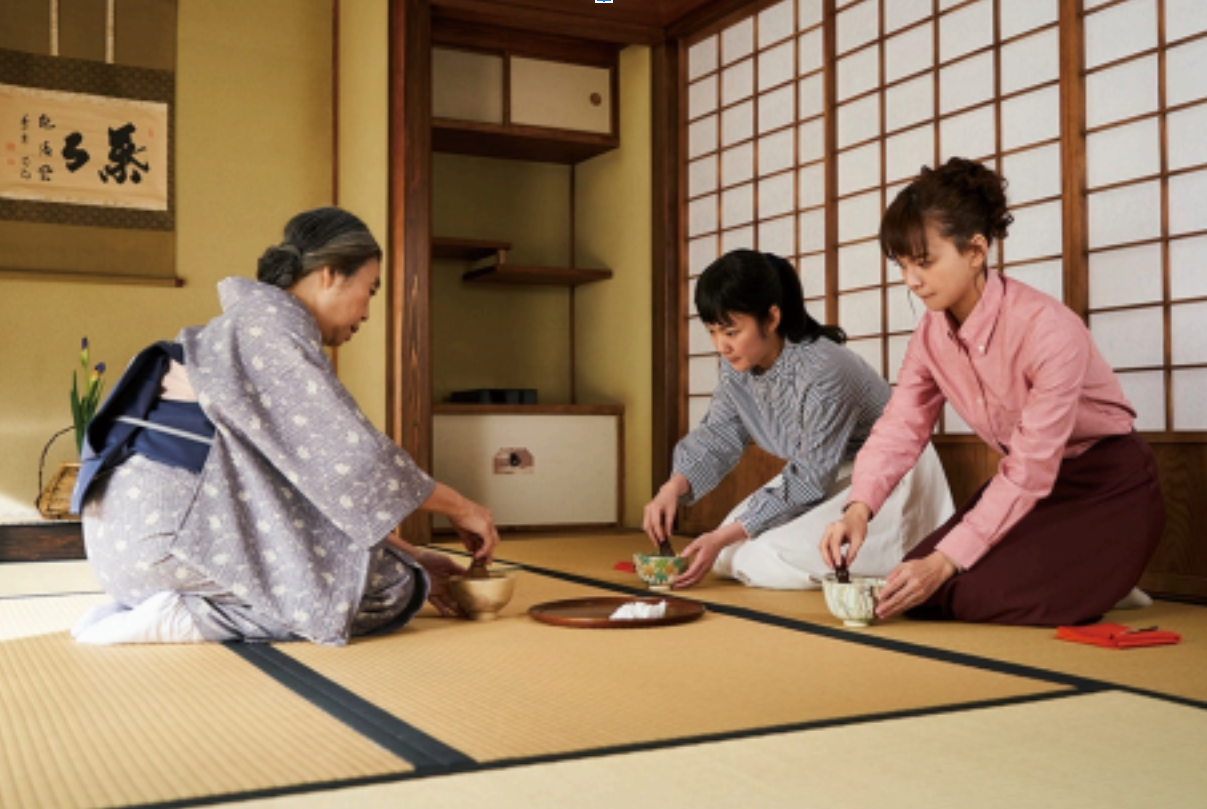
Third, and on a personal level, I think more people should try to engage with matcha as an object and Chado as a practice. There is no shortage of books and online resources that help to educate audiences about how Japanese tea is and was. The significance is in taking the time to learn more about it or settling and drowning in a sea of ignorance. For almost any piece of artistic or cultural heritage, especially a food and drink like matcha, learning about how it is made and what structures and perspectives have developed around it is an incredibly enriching experience. It both allows for a deeper appreciation for this green liquid, in a bowl or poured into milk (or even beer as I have found out). Japan prior to this massive craze was not exactly the most elitist, gatekeeping or protective of matcha as a product. It was already consumed in a variety of ways and culinary matcha was already a strong fixture in all manner of savoury and sweet dishes. And yet all of this was done in an air of broad appreciation and sensible consumption. Even with the decrease in students and practitioners of Chado and the tea ceremony, its mere presence in the culture of the nation would have allowed for the respect and even curiosity towards it as a practice. To have matcha without a deeper consideration for Chado and even green tea and matcha’s roots prior to Sen no Rikyū and tea’s arrival in Japan would be like trying to ignore pasta’s deeper historical and cultural significance to Italy as part of a development in its cuisine (of course it is also easier to mass produce pasta, going to show how each object is unique and should not be generalised and commodified). This gets back to how likely a limited amount of people who are just now having matcha on their minds more than before are actually going to engage deeper with all of this. So in this appeal or solution, it is a personal recommendation for any reader to try and open themselves to all of this as a topic. A personal favourite book relating to matcha and Japanese tea is Per Oscar Brekell’s A Beginner's Guide to Japanese Tea, which details more than just matcha and is an incredibly accessible resource to getting a general understanding. Some other resources that have helped offer a good dive into Japanese tea culture and Chado is Every Day a Good Day: Fifteen lessons I learned about happiness from Japanese tea culture by Noriko Morishita, a book that does well to try and translate some of the philosophical aspects of Chado as a philosophy and practice, later adapted into a wonderful 2018 film of the same name. Finally one more on the film side is Rikyu (1989), dir. Hiroshi Teshigahara, an incredibly well made examination on Japanese tea and the ceremony as exemplified in the figure of Sen no Rikyū and revealing the political aspects of the practice.
As can be seen here, this current matcha craze has shown itself to be a rather surface level engagement with matcha as a cultural object. And yet this shallow dive has been dug out on a massive
scale, greatly diluting the practice and heritage out of matcha, distorting a market that has become incredibly unregulated and risking further environmental costs. This degree of uncontrolled, superficial globalised consumerism should be prevented from further degrading matcha and all its possible real-world implications for various actors. The struggle will undeniably be long term but a great lesson can be taken from Chado as it is shown in the film Every Day a Good Day (2018), dir. Tatsushi Ōmori. The protagonist of the film, Noriko, lives through many years of her life while trying to regularly make the time to study tea and at times gets lost as life brings its ups and downs. And yet, when tea comes around as this sole constant and consistent practice the audience, perhaps before Noriko, can begin to come to terms with how the pure simplicity and humbleness can put one in a meditative state, and appeal to that deeper human core. I deeply hope that this message far outlasts the trend in its high paced dynamics, for ultimately, for me, one seems far more natural and human
