

Understanding the Mekong River
Reframing our Understanding
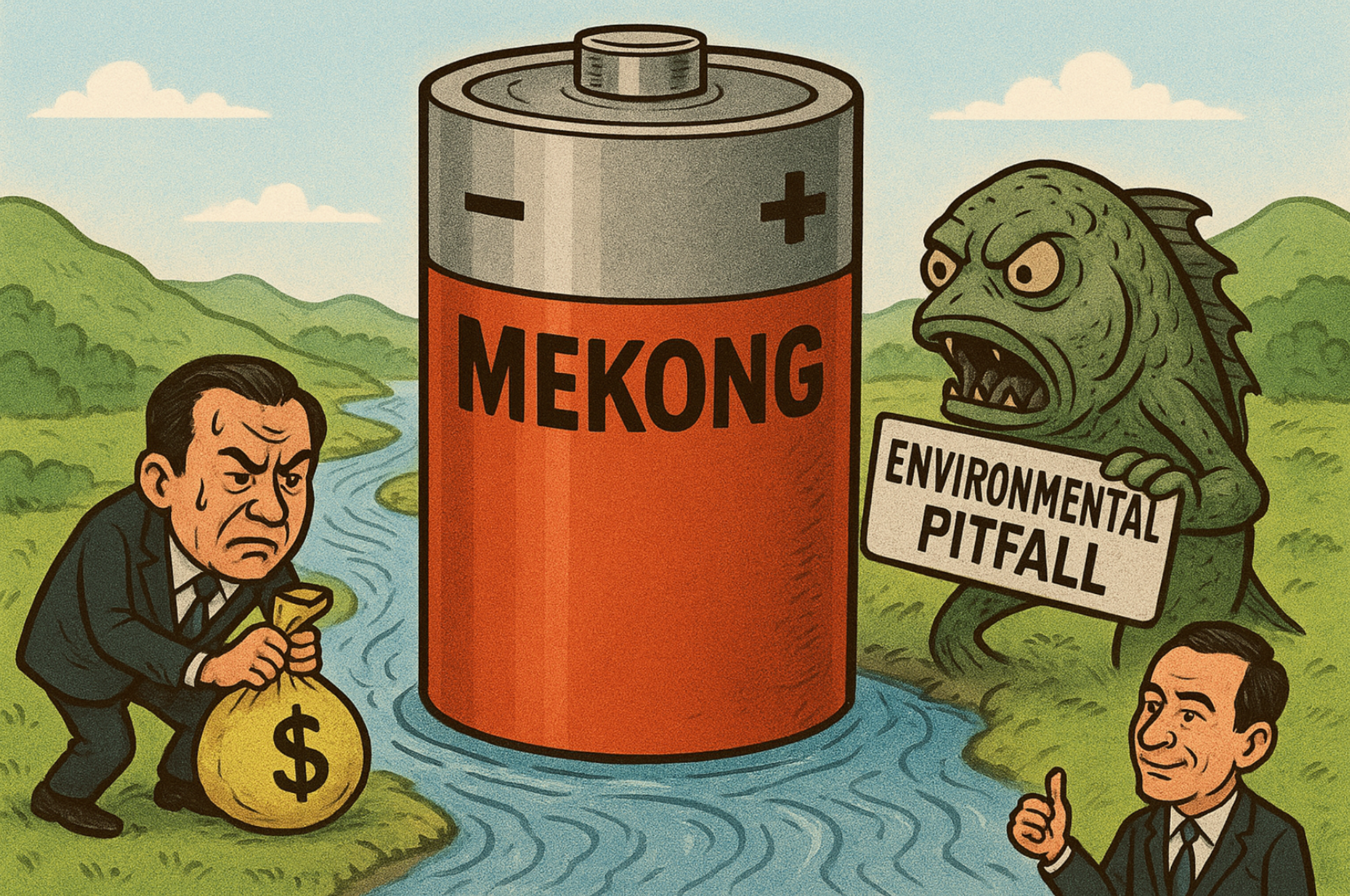
As Southeast Asia’s longest river spanning six states (Figure 1), the Mekong supports 65 million people and 22,000 recorded species of biodiversity (Soukhaphon, Baird and Hogan 2021: 1). Its multi-faceted aspects – morphology (shape of river), hydrology (water cycle), geomorphology (study of landforms) and ecology (study of biodiversity) – have been studied by geographers for decades (Campbell 2009: 1). However, the introduction of Hydro-Electric Power (HEP) Dams in 1965 has reshaped the natural processes (Soukhaphon, Baird and Hogan 2021: 2). Thus, the socio-economic and environmental impacts of HEP Dams, as well as the geo-strategic implications of upstream states influencing the quantity and quality of water must be evaluated. To better appreciate the evolving state-of-affairs, the Mekong River can be understood as an energy accumulator, an environmental pitfall and a geopolitics arena.

Figure 1: Map of the Mekong River (Chang 2013: 283)
An Energy Accumulator
The Mekong can be considered an energy accumulator because the multitude of HEP Dams have the potential for large-scale renewable energy production (Chang 2013: 284). These colossal structures that are built across the river regulate water flow using sluice gates. When there is a demand for electricity, water is released from the storage reservoir upstream (Figure 1) (Water Science School n.d.). Gravitational potential energy is converted to kinetic energy as water flows down the penstock, which then drives the turbine. Electricity produced in the generator is transmitted via power transmission cables.
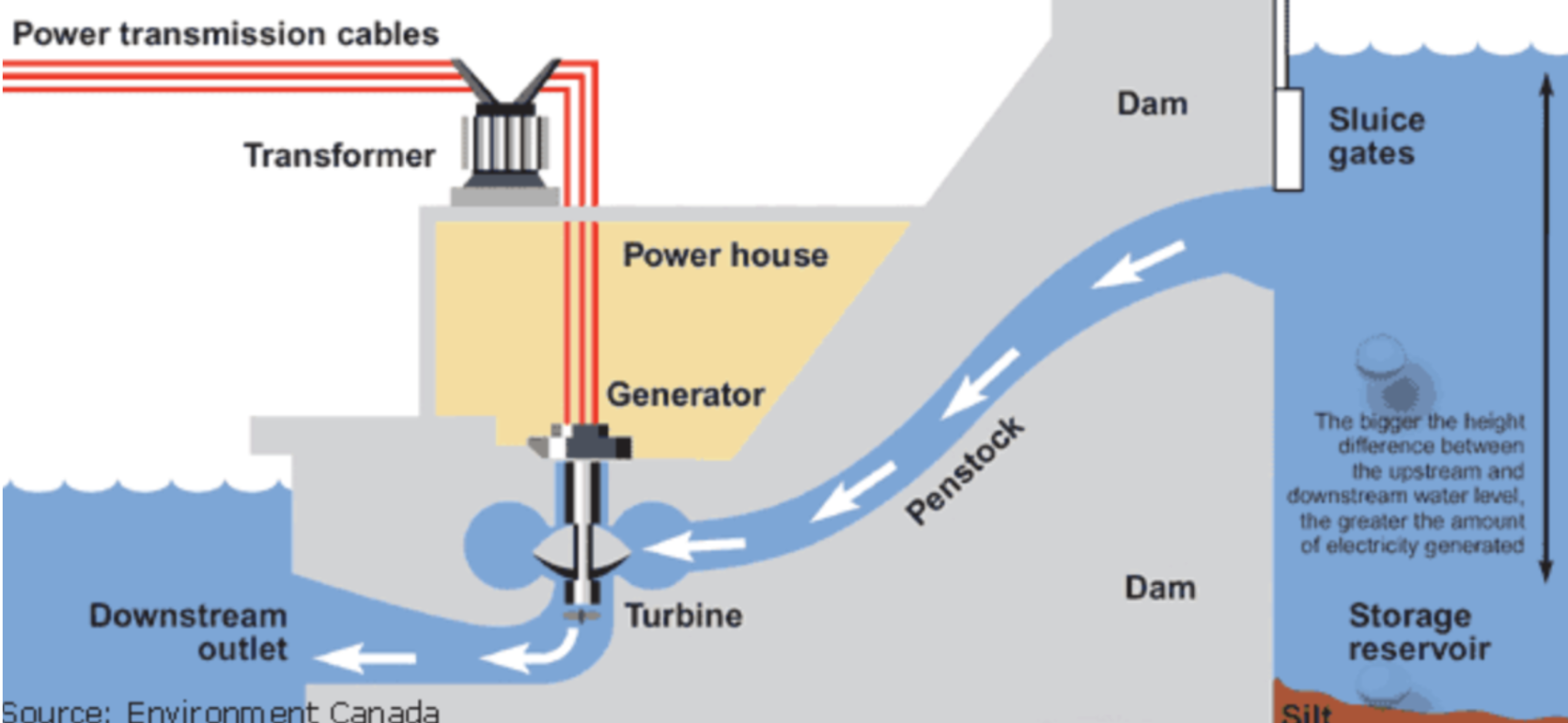
Figure 2: Cross section of a HEP Dam (Water Science School n.d.)
HEP Dams fundamentally change our perception of water – from a neutral agent to a tool that brings socio-economic benefits to mankind. However, very few stakeholders possess the capabilities and resources to exploit it effectively, perhaps only the state and private HEP Dam operators (Chang 2013: 295). As such, they possess the carte blanche to determine the quantity of water flowing downstream, the amount and price of hydroelectricity. This echoes with Massey’s (1993) “power-geometry” theory, which proposes that certain groups in society control the “flow and movement” of others (Massey 1993: 151). The flow (or lack thereof) of water affects the transportation of people, capital and goods downstream (Lin and Grundy-Warr 2020: 827). More profoundly, their foothold in the energy supply chain affects the sustenance of contemporary human lifestyle, which relies heavily on electricity. The potential of generating sustainable energy reshapes the power structures governing the energy supply chain. Upstream states and influential energy cooperations will accrue an asymmetric bargaining power vis-à-vis downstream states and end-users. Thus, the wider socio-economic and political impacts of HEP Dams must not be overlooked.
Should the authorities or private companies conduct themselves responsibly, the economic benefits of HEP Dams will be enjoyed by society. The establishment of a local or regional renewable energy market will promote economic growth and job creation, enabling the populace to pursue a higher quality of life (Chang 2013: 282). For example, the Laos People’s Democratic Republic (PDR) operates 61 HEP Dams that generate 37,000 kilowatt hours of electricity annually. Upon completing 36 other HEP projects, an additional 20,000 megawatts of electricity will be available for export (Chang 2013: 286). Even so, most jobs were created during the initial construction phase and the energy export market is still nascent (Mekong Region Futures Institute 2024: 31). As such, it is yet to be seen if this HEP-driven economic growth will be sustained. In addition, the negative externalities and unintended consequences must also be factored in, to accurately evaluate the merits of HEP Dam development.
An Environmental Pitfall
With far-reaching ramifications on riverine ecosystems, the Mekong can be considered an environmental pitfall. The deliberate fragmentation, collection and release of water alter the geochemical and biological processes (Soukhaphon, Baird and Hogan 2021: 5). It disrupts the distribution of sediments and aquatic organisms within the river. Migratory fish, like the Giant Mekong Catfish, are unable to feed and spawn upstream (WWF 2013). Thus, its demise has thrown the entire food chain into disarray, given its pivotal role in controlling algae growth (Tongsiri 2010: 109). The knock-on effects have also been experienced by riparian fishing communities, who have suffered an annual income loss of US$500 million owing to reduced catch (Soukhaphon, Baird and Hogan 2021: 13). These socio-environmental impacts are further accentuated by climate change, which causes warmer river temperatures and sea water intrusion (Kaushal et. al. 2025: 1). Consequently, reproductive rates of aquatic life have been reduced, and freshwater is rendered unusable for drinking and irrigation.
Although these villagers are facing a double whammy, governments have ironically justified HEP Dams as ‘climate change mitigation’ while multilateral banks have embraced these ‘clean and green’ investment opportunities (Soukhaphon, Baird and Hogan 2021: 12). Insofar as HEP Dams are regarded as silver bullets to sustainable energy transition, have these policy-architects overlooked the large amounts of greenhouse gases emitted during construction? Has the loss of green carbon sinks, when reservoirs for HEP Dams encroach into rainforests, been accounted for? Even if all possible HEP sites in the world were utilised, less than half of our energy demand would be met (Soukhaphon, Baird and Hogan 2021: 12).
The illusion of HEP Dams has been accentuated by society’s instrumental approach towards water, which is increasingly valued for its economic value vis-à-vis its pivotal role in regulating ecosystems. While consumers do not call the shots in resource appraisal, they remain complicit actors in this environmental debacle. Our burgeoning demand for electricity runs counter to the states’ commitment to reduce emissions under the 2015 Paris Agreement (UNFCC n.d.). Consequently, policymakers are placed between the devil and the deep blue sea, leaving them with little choice but to leverage on hydroelectricity to fulfill the needs of different stakeholders. As Cronon (1996) rightly observes, adopting the belief that we are ‘separate from nature (reinforces) environmentally irresponsible behaviour’ (Cronon 1996: 22). Riparian states must recognise the interconnections and interdependence between society and the environment. Policies to socially engineer sustainable behaviour and business practices, such as pollution taxes, are needed to imbue the gravity of the situation into their populace. Unless bold and decisive actions are taken, the Mekong Delta will descend into an abyss of irreversible environmental degradation. Therefore, the environmental pitfall is twofold – governments developing a false sense of assurance that HEP Dams are sustainable and consumers being detached from reality that their electricity is produced at the expanse of nature.
A Geopolitical Arena
However, the resolution of Mekong’s environmental crisis has been hamstrung by the vested political interests of some riparian states. Hirsch (1988) attributes the pre-occupation with HEP Dams to their “symbols of independence and national self-sufficiency” (Hirsch 1998: 3). As large-scale projects, they are a bellwether of a state’s political, economic and technological prowess. Calling upon them to impose a moratorium will be a Gordian Knot and may even be perceived as provocative.
The PRC is located at the head of the Mekong, with 11 operational HEP Dams in the mainstream delta (Figure 3). These structures have “significant” capacities to store and fully control the flow of water (Chang 2013: 284). The ability to usurp a lion’s share of the resources, at the expense of downstream states, has raised concerns that water could be weaponised.
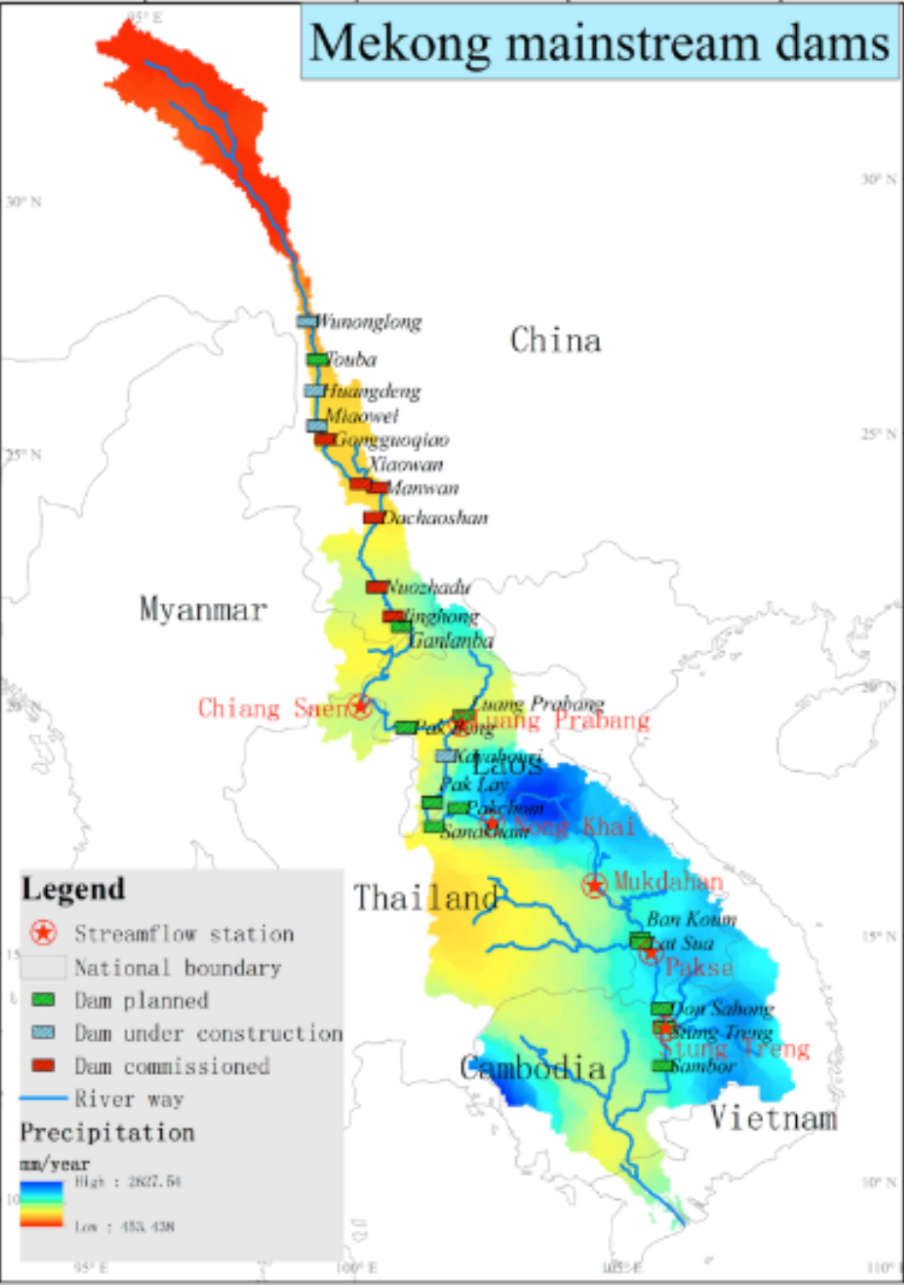
Figure 3: Mekong mainstream dams (Wang, Lu, Li and Leung 2017: 4)
Notably, the PRC has declared water flowing through its territory as “sovereign property” (Soukhaphon, Baird and Hogan 2021: 9). This creates a “us-versus-them” dichotomy, where the former is perceived to have legal ownership and the rights to implement water management strategies without the influence of others. This is contrary to the United Nations Watercourse Convention, that mandates states to utilise transboundary water resources “equitably” (United Nations 1997: 4). Even so, the deliberately vague phrasing of international conventions has allowed states to interpret them differently, causing regional tensions (Melikyan 2017: 1).
To maintain the peace and stability of the riparian basin, the Mekong River Commission (MRC) was established in 1995 by Cambodia, Laos PDR, Thailand, and Vietnam. Signatories agreed to protect the environment from pollution and cooperate on the development of hydropower and irrigation (Mekong River Commission n.d.). This platform serves as a force multiplier, when smaller, like-minded states advocate for their common interests. Their collective influence exerts diplomatic pressure on larger states, compelling them to agree or compromise on the issues at hand to maintain their international standing.
In response to the MRC, the PRC established the Mekong Lancang Corporation (MLC) in 2016 as a “sub-regional cooperation mechanism for efficient water resource management” (Mekong Institute 2019: iii). Unlike the MRC, the MLC adopts a state-led approach spearheaded by the PRC. Setting the agenda for multilateral collaboration could be interpreted as a subtle way for the PRC to safeguard its unilateral interests while creating opportunities for cooperation. These state-to-state exchanges foster amiable relations and stability in the region, which is in Beijing’s interest.
Furthermore, the PRC has provided Myanmar and Laos PDR with technical and financial assistance for their HEP Projects (Kuik 2023: 32). The recipient states have demonstrated “renewed appreciation” for the PRC’s policy of non-interference in their internal affairs, unlike the “intrusive” clauses found in Western economic aid (Chang 2013: 290). It is evident that the PRC is leveraging inherent weaknesses of Western-dominated multilateral financial institutions to exert its influence over the region. This “soft power” foreign policy tool is important to the former, given enhanced US rapprochement with the region. The quid pro quo diplomacy fosters an “uneven negotiating power” among riparian states, allowing the PRC to arm-twist recipient states into adopting a favourable foreign policy stance (Soukhaphon, Baird and Hogan 2021: 11). Slowly but surely, this inherent difference in viewpoints may become a liability as not everyone is striving towards the common goal in the MRC. With less pronounced opposition, the PRC can exploit the river basin more easily, establishing a flywheel effect that benefits itself. Therefore, the Mekong can be seen as a labyrinth of overlapping, permanent interests and spheres of influence. Undoing these interconnected networks of unilateral priorities cause regional tensions.
Conclusion
In conclusion, the development of HEP Dams has shaped the economic, environmental and political perceptions of the Mekong profoundly. Reframing our understanding from the viewpoints of an energy accumulator, environmental pitfall and geopolitical arena gives us a glimpse into the challenges within the basin. If left unresolved, these burgeoning issues will eventually undermine mankind’s ability to sustain itself with the river. Patricia Mische (1989) astutely noted that ecological security “cannot be defined ideologically (or) resolved through conventional competition for power” (Mische 1983: 393). Therefore, policymakers need to muster the political willpower to tackle these issues on multiple fronts collectively. Beyond ameliorating the impacts imposed on riparian communities, politicians should seriously consider what they would want to leave behind for future generations. As Cronon (1996) observes, “If living in history means that we cannot help leaving marks on a fallen world, then the dilemma we face is to decide what kinds of marks we wish to leave” (Cronon 1996: 23). I fervently hope the powers-that-be will choose to live a legacy of hope and cooperation.
